


















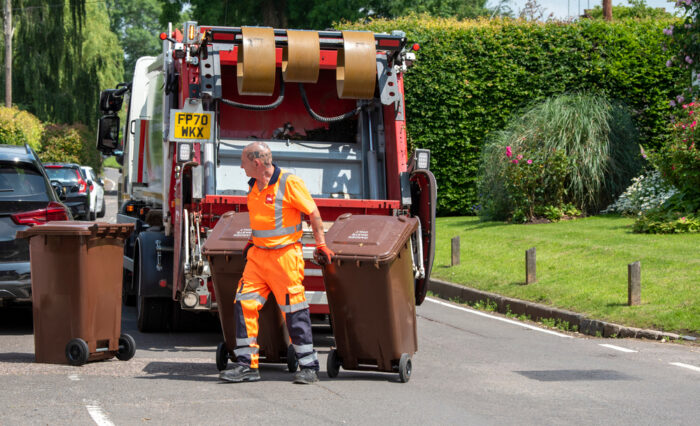
Oxford’s waste and recycling crews have faced 15 incidents of dangerous pavement driving in the past 18 months. The waste management experts at ODS explain how its DROPs campaign, CCTV and training are working to protect frontline staff, and why a little patience from motorists can make all the difference.
- What prompted ODS to launch the DROPs campaign, and what have you seen in terms of dangerous driving behaviour around your waste and recycling crews?
We launched the DROPs campaign after repeatedly witnessing dangerous driving around our frontline waste and recycling crews across Oxford. We’ve seen drivers mount pavements, speed past collection vehicles, attempt to squeeze through tight gaps, and carry out unsafe overtakes, leading to numerous near-misses and close calls. Our aim is to raise awareness and encourage drivers to slow down, be patient, and think twice before making risky manoeuvres around collection crews, pedestrians and all road users.
- ODS recorded 15 incidents involving vehicles driving dangerously on pavements between March 2025 and August 2026. What do these incidents tell you about the risks faced by frontline crews, and are there particular types of road-user behaviour that are especially concerning?
The 15 incidents show that dangerous driving around our frontline crews remains a persistent issue. Of particular concern are drivers mounting and driving along pavements to get around collection vehicles, putting both our crews and pedestrians at risk.
- The campaign uses messaging on staff uniforms and collection vehicles, including ‘Someone’s loved one is behind this truck’ and ‘This street is someone’s workplace’. What impact do you hope this more personal approach will have on motorists?
The messaging is intended to remind motorists that behind every collection vehicle is a real person, not just a worker. Our crews are someone’s parent, partner, friend or family member, and they deserve to feel safe while doing their job and return home safely at the end of the day. By taking a more personal and emotive approach, we hope to encourage drivers to be more patient, considerate and aware of the impact their actions can have on those working on our streets.
- Beyond the campaign messaging, what practical measures is ODS taking to protect its workforce — such as training, reporting systems, specialist equipment and CCTV — and how do these measures work together?
At ODS, health and safety is one of our core values. We support our crews through a combination of training, equipment, reporting systems, CCTV equipped vehicles and other on-street safety measures. Vehicle mounted CCTV helps us capture and report incidents to the police, supports investigations and provides reassurance to crews. These measures help improve safety and reduce risk, but road safety is a shared responsibility. We all have a role to play in ensuring our streets are safe for those working on them and using them.
- What would you most like motorists and other road users to understand about working around waste and recycling vehicles, and what simple changes in behaviour could make the biggest difference to crew safety?
What we’d most like road users to understand is that waste and recycling crews are real people carrying out an essential service to help keep Oxford clean and running smoothly. They’re someone’s parent, partner, friend or family member, and they deserve to feel safe at work.
The biggest difference motorists can make is simply to be patient. Giving crews a little extra time and space to do their job safely is far better than attempting a rushed overtake or squeezing through a tight gap. A few seconds saved is never worth risking a near-miss or serious incident.
By slowing down, waiting for a safe opportunity to pass and showing consideration, road users can help protect our crews, pedestrians and other motorists, ensuring everyone gets home safely at the end of the day.
Photo: © Peter Titmuss / Shutterstock.com
Leave a Reply