
















From HGV apprentice to interim fleet specialist, Bob Bowdler has spent decades getting struggling local authority fleet operations back on track. He talks to LAPV about why compliance goes undetected, how to build capability without creating dependency, and what good fleet strategy looks like today.
- You started your career as an HGV apprentice mechanic. How has that background shaped the way you approach fleet governance and compliance?
Starting out as an HGV apprentice mechanic gave me a very practical understanding of vehicles from the ground up. You quickly learn that good fleet management starts with getting the basics right: regular maintenance, proper inspections, accurate records and safe working practices.
One of the biggest lessons was the value of preventative maintenance. When you are working on vehicles day to day, you see how a small defect can quickly become a much bigger problem if it is not picked up early. That still shapes how I look at compliance now. For me, it is not about ticking boxes; it is about having reliable systems in place that keep vehicles safe, roadworthy and available when the council needs them.
It also gave me a strong appreciation of how important vehicles are to service delivery. In local government, fleets are there to support essential frontline services. If vehicles are off the road, productivity drops and services can be affected. Good fleet governance is about making sure maintenance, uptime and compliance all work together to support the wider council.
Another lesson from those early workshop days was the importance of recording what you do. Whether it was logging repairs, identifying parts used or pricing jobs, accurate records mattered. That is still the case today – only now it links directly to audit trails, operator licence compliance, budget control and being able to show that the right decisions have been made.
So, my technical background has given me a very practical approach to fleet governance. I always come back to the fundamentals: safe vehicles, planned maintenance, accurate records, competent people, clear processes and a proper understanding that fleet is there to support frontline service delivery.
- You’re often brought in during periods of crisis. What are the most common underlying problems you find when you step into a struggling local authority fleet operation, and why do they tend to go undetected for so long?
When I’m brought into a local authority the fleet operation is already under pressure, the first thing I usually find is that the fleet service has been expected to ‘just work’ for years – until suddenly it doesn’t.
Fleet sits behind a wide range of essential council services: waste, housing repairs, highways, social care, school transport, ground maintenance and many other frontline services. If vehicles and plant are available, people often assume everything is fine. But beneath the surface there can be ageing assets, weak records, unclear responsibilities, rising hire costs and growing compliance risk.
One of the most common issues is weak governance. The operator’s licence may sit with one part of the council, while vehicles, drivers and operational control are spread across several services. That creates a real risk.
I also look at whether the basics are written down. If I cannot easily find key fleet policies, that tells me the operation is struggling. At a minimum, I would expect to see clear arrangements for first-use inspections, vehicle off-road procedures, wheel and tyre management, driver walk-round checks, defect reporting, and weight and height compliance. If those basics are missing, work needs doing.
Another tell-tale sign is the competence of the workforce. People may have been in post for many years, but have they kept their knowledge up to date through recognised training? That might include IRTEC licensing, bin-lifter training, manufacturer training, or other role-specific development. Length of service on its own is not enough.
The reason these issues go undetected for so long is simple: fleet is often seen as a support function rather than a strategic risk area. If bins are collected, repairs are completed and vehicles are still moving, people assume the system is working.
- There’s sometimes a tension between getting quick results as an interim and leaving something genuinely sustainable behind. How do you make sure you’re building capacity rather than dependency?
That tension is very real. As an interim fleet manager, you are usually brought in because something needs attention quickly – sickness cover, a compliance issue, a struggling workshop, poor vehicle availability, rising maintenance costs, or preparation for external scrutiny. So yes, part of the role is to deliver early value and steady the ship.
But the key is not to become the solution yourself. The job is to help the organisation understand the problem, put structure around it, and build the confidence and capability of the people who will still be there after you have gone.
The first thing I try to do is agree with the sponsor or senior manager what success looks like. That might mean better vehicle availability, lower maintenance costs, stronger compliance records, preparation for a Traffic Commissioner Public Inquiry, or simply helping a team through a difficult period of change. It also has to be realistic. An interim working a few days a week for a short period cannot deliver the same change as someone embedded full-time for a year, so expectations need to be clear and proportionate.
I also think it is important to work alongside the team, not over the top of them. In most councils, staff already know many of the day-to-day issues. What they often lack is the time, capacity or support to deal with them properly. A big part of the interim role is coaching and mentoring – helping supervisors, technicians, fleet officers, drivers and managers understand not just what needs to change, but why it matters.
For me, building capacity means keeping things simple, visible and repeatable. That could be a clear action tracker, better defect reporting, tighter maintenance planning, improved PMI quality, or stronger links between fleet, operations, procurement and finance. The aim is not to create systems that only the interim can manage. It is to put practical routines in place that the council can keep using.
- Fleet compliance in local government carries real legal and reputational risk, yet it can struggle to get boardroom attention – how do you make the case to senior leaders that it deserves to be taken seriously?
For me, the starting point is to make fleet compliance relevant to the issues senior leaders already care about: public safety, legal accountability, service continuity, corporate risk, finance and reputation.
Fleet compliance is not just about inspections and protecting the operator’s licence. That is only part of it. The other side is driver operations – how drivers are managed, trained, supervised and supported day to day. A council can have a well-maintained fleet, but if driver management, route risk, reversing controls, agency driver checks, walk-round reporting, fatigue management or site traffic arrangements are weak, the overall risk is still high.
That is why senior leadership awareness matters. Traffic Commissioners increasingly expect directors and responsible senior officers to understand their responsibilities under the operator licensing regime. Operator Licence Awareness Training (OLAT) helps bridge that gap by setting out what the licence requires, where responsibilities sit and what happens if control is lost. In my experience, many directors rely heavily on fleet services but have had little formal exposure to operator licence requirements. That gap needs closing.
Most councils running HGVs understand the need to protect their operator’s licence, and in many authorities that risk already sits on a corporate or directorate risk register. It should, because the consequences are not theoretical. If the licence is curtailed, suspended or revoked, services such as waste collection, highways, grounds maintenance and winter maintenance can be hit immediately.
But good fleet compliance protects far more than the operator’s licence. It protects people, services, public confidence and the reputation of the council. Technology can help with control and evidence, but the real issue is leadership. Senior leaders need to understand the risk, ask the right questions and give fleet teams the support to manage compliance properly before something goes wrong.
- With decarbonisation targets, rising costs and workforce pressures all hitting at once, what does good fleet strategy look like for a local authority?
For me, a good fleet strategy has to be realistic, joined-up and rooted in what the organisation is trying to deliver. It needs to balance compliance, service resilience, cost, workforce capacity and decarbonisation, without losing sight of the practical realities on the ground.
Many councils are struggling to decarbonise their fleets at the pace they would like. The ambition may be there, but the barriers are significant: funding, high vehicle costs, limited charging infrastructure, depot capacity, long lead times and competing priorities.
Decarbonisation is not just about buying new vehicles. One of the biggest opportunities is to look at whether councils are operating more vehicles than they really need. A good strategy should start with demand. What vehicles are needed, by which services, how often are they used, and could some be shared, pooled, removed or replaced with a different operating model? If fleet teams work closely with the end users of transport – waste, housing, highways, parks, social care and other service areas – they can build a far more realistic fleet demand plan.
Reducing the number of vehicles can be one of the most practical ways to cut emissions and cost. Fewer vehicles means lower capital spend, reduced maintenance, fewer inspections, lower insurance and less administration. It also makes the move to electric or alternative fuels more manageable, because the council is not trying to replace vehicles it may not genuinely need.
How far are councils from achieving decarbonisation? I would say the sector is moving, but unevenly. Decarbonisation matters, but it has to start with a realistic fleet strategy. Councils need to understand demand, reduce vehicles where they can, invest where it makes sense and avoid replacing old problems with expensive new ones.
Sign up here to receive our free weekly news bulletin and quarterly e-book.
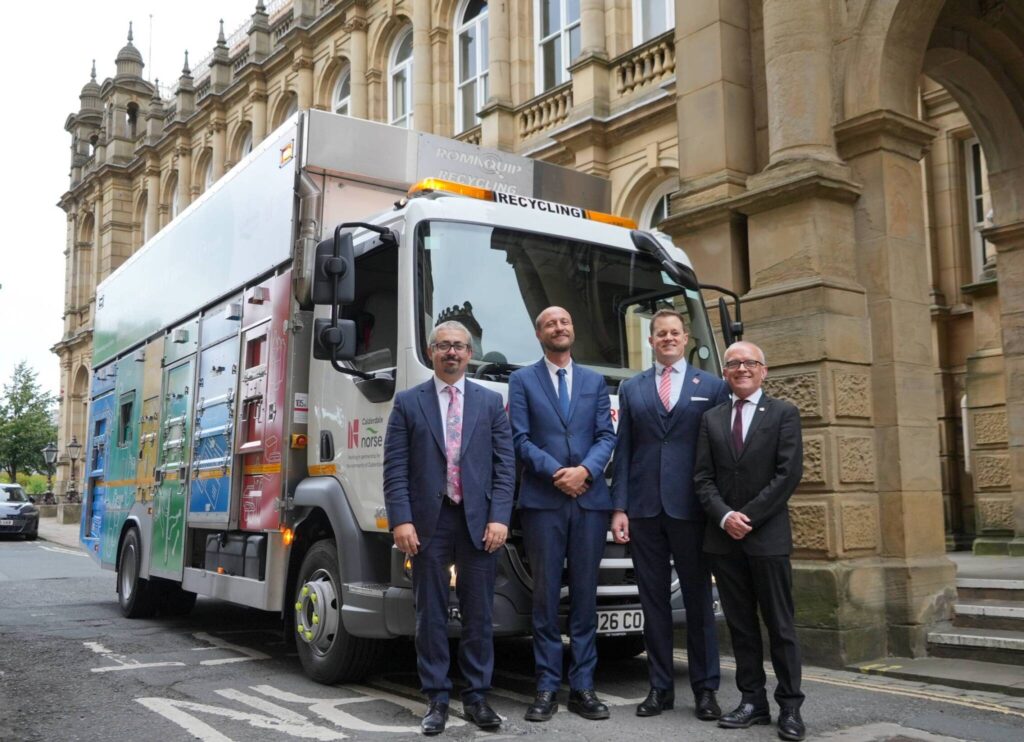
Photo: Bob Bowdler is Interim-Fleet Contract & Transport Manager at BB Consultancy Ltd and an APSE Associate.
Leave a Reply