













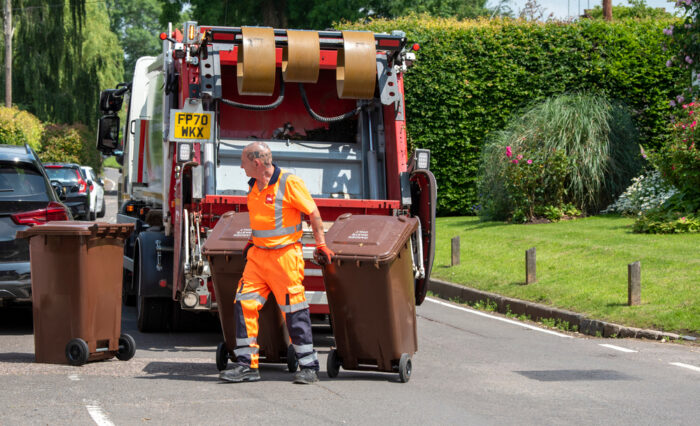


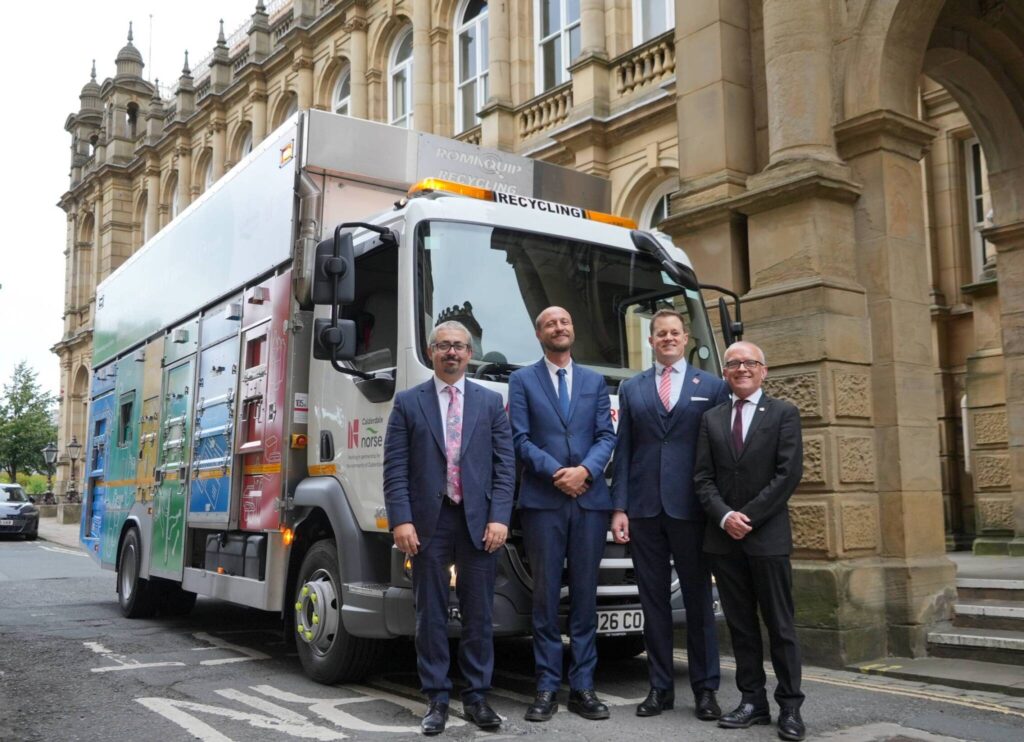


As the London Borough of Hackney rolls out 20 new HVO-powered sweepers, Corporate Fleet Manager Norman Harding tells LAPV why the council has stuck with renewable fuel rather than rushing to full electrification – and what other authorities can learn from nearly three decades of green fleet experience.
When the London Borough of Hackney introduced 20 new sweepers from Scarab Sweepers last month, it might have looked, at first glance, like a routine fleet replacement. Seven Merlin 62 truck-mounted sweepers, 12 RAVO R2 compact sweepers and one RAVO R1 sub-compact sweeper have taken up duties cleaning roads, high streets and residential areas across the borough. But the real story lies in how they’re powered – and in the decades of groundwork that made the decision almost inevitable.
All 20 vehicles run on hydrotreated vegetable oil (HVO) rather than diesel, a choice expected to cut greenhouse gas emissions from the fleet by up to 90%, alongside reductions in nitrogen oxides and particulate matter. For many councils, a switch of this kind would represent a bold leap. For Hackney, it’s simply the latest step in a sustainability journey that began before most local authorities had electrification on their radar at all.
‘From a sustainability and environmental point of view, the London Borough of Hackney is one of the most progressive local authorities in the country having operated BEVs [battery electric vehicles] since 1998 and biofuels since 2008,’ says Norman Harding, Hackney’s Corporate Fleet Manager. The council transitioned most of its internal combustion engine vehicles and plant to HVO as far back as 2016, following formal emissions testing at Millbrook Proving Ground that same year – work carried out in partnership with Transport for London as part of the London Mayor’s Biodiesel programme, to which Harding was seconded at the time.
Why HVO, not full electrification?
Given that history, it might seem surprising that Hackney chose HVO over battery power for its new sweeper fleet. But Harding is clear that the decision reflects operational reality rather than any lack of ambition. ‘While progressing the use of fully electric vehicles is our main priority, achieving it is harder than using HVO due to numerous operating challenges,’ he explains. The council already operates 125 BEVs alongside depot-based charging infrastructure but has ‘reached a saturation point due to these challenges.’
Recent regulatory flexibility – allowing light commercial vehicles to operate at 4,250kg gross vehicle weight – has opened up a little more room for additional BEVs this year. Where full electrification isn’t yet feasible, though, HVO remains the fallback. ‘Even the outgoing sweepers were operated on HVO,’ Harding notes, ‘and until we can electrify parts of our larger vehicle fleet, HVO will remain the fuel of choice.’
It’s a pragmatic position, and one that reflects a wider truth about municipal fleet decarbonisation: the technology best suited to a car or light van isn’t always ready for heavier, more specialist vehicles like road sweepers, refuse collection vehicles or HGVs.
A whole-fleet approach
The new sweepers form part of a much broader fleet replacement programme. ‘All Hackney’s vehicles including plant will operate some form of alternative fuel apart from a small number of vans that still use standard road diesel from high street forecourts,’ Harding says, explaining that this is purely a logistical issue: refuelling those vehicles from the council’s HVO storage tanks isn’t currently practical. A handful of small plant items remain on petrol simply because no electric or hybrid alternative yet exists for them.
Measuring what matters
For a transition of this scale to mean anything, it has to be measurable – and Hackney has built the infrastructure to prove its impact. The council uses fuel software linked to its bulk storage tanks, capable of monitoring consumption ‘to the fraction of a litre.’ From those figures, a standard conversion metric produces a CO2 saving calculation. The results speak for themselves: combined HVO and BEV savings reached 2,643.2 tonnes of CO2 during the 2025/26 financial year, a figure Harding expects to improve further as more vehicles transition to BEV and HVO through the normal fleet replacement cycle.
Early feedback from the operational side has also been positive. ‘Feedback from the operatives has been very positive, requiring no modification to service operations,’ Harding says. He also singled out Scarab Sweepers for praise on the commercial side of the rollout, describing the manufacturer’s aftersales performance as ‘fantastic’ and its social value engagement during procurement as setting ‘a benchmark standard for all suppliers to aspire to.’ Matthew Burdon, Scarab Sweepers Regional Sales Manager for London & the South East, was equally as complementary: ‘Hackney has been at the forefront of the industry as one of the earliest adopters of HVO fuel. By operating these brand-new sweepers on renewable fuel, residents can expect cleaner streets with a significantly reduced environmental impact.’
Looking ahead: waste to energy
Hackney’s long-term ambitions don’t stop at operating zero emissions vehicles. Harding reveals the council is exploring a micro ‘waste to energy’ plant using pyrolysis as an energy conversion process – an idea driven as much by cost pressures as by environmental goals. ‘The cost to dispose of our daily collected waste is substantial,’ he says. ‘If we can use some of that waste to create our own energy there is scope to electrify our HGVs and sell surplus energy back to the grid.’ He’s realistic about the challenges involved, describing the concept as one that ‘ticks all the right boxes’ in theory but remains ‘a few years’ away from delivery.
Lessons for other authorities
For councils considering their own move to HVO, Harding’s advice is grounded in nearly a decade of first-hand experience. ‘Thoroughly do your homework,’ he urges. While the fuel requires no vehicle modifications, cost can be a barrier, and he recommends carefully assessing the market for the best prices. Smaller councils, he suggests, should consider pooling orders with neighbouring authorities to boost volumes and drive down costs.
He also flags a lesser-known pitfall: suspiciously cheap HVO may in fact be GTL (gas-to-liquid) fuel, which looks identical but isn’t the same product. Harding recommends that authorities specify minimal virgin palm oil or palm oil effluent content when tendering for bulk fuel supplies, given ongoing concerns about feedstock sourcing, and ask suppliers for independent supply chain quality assurance certificates.
There’s also a practical, easily overlooked detail for any authority making the switch: electronic ‘dip’ measuring systems in bulk storage tanks will need recalibrating. HVO has a different density to standard diesel (DERV), meaning uncalibrated systems can give a false reading of residual stock levels – a small technical detail, but one that could cause real headaches for fleet teams caught unaware.
As more councils weigh up their own decarbonisation pathways, Hackney’s experience offers a useful reminder that the ‘greenest’ option isn’t always the electric one – it’s the one that actually works, today, for the vehicles a council needs to keep its streets clean.
Photo: The London Borough of Hackney has rolled out 20 new HVO-powered sweepers © Scarab Sweepers
Leave a Reply