

















When Westminster City Council and Veolia launched the UK’s largest electric refuse collection fleet in the summer of 2023, it was a landmark moment for local government fleet decarbonisation. Three years on, LAPV catches up with Edward Yendluri, Contracts Manager for Waste and Cleansing, to find out how the operation is performing – and what comes next.
When Pascal Hauret, Managing Director of Veolia UK Municipal, stood up at Westminster City Council’s new Landmann Way depot in July 2023 and declared there had been ‘no rule book’ for the project, he was not being modest. The council and its environmental partner had invested £20m in 45 brand new Dennis Eagle eCollect trucks, built a purpose-designed fully electric depot in southeast London capable of charging 54 vehicles simultaneously, and – in an innovation that caught the attention of fleet managers across the country – arranged for the trucks to be powered by electricity generated from the very waste they collected. At the time, it felt like a bold gamble on a technology that was still finding its feet in the heavy vehicle sector. Three years later, the verdict is in.
The numbers speak for themselves
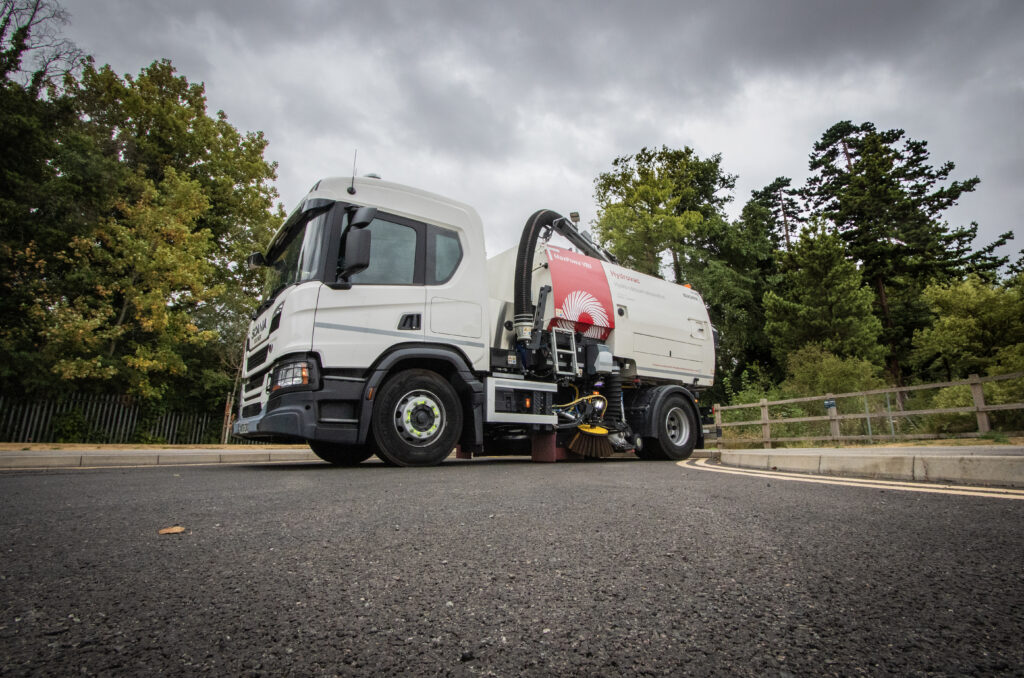
The headline figure from Westminster’s electric fleet programme is striking. Since the introduction of the electric large trucks and medium street cleansing fleet, the council has eliminated over 2,500 tonnes of tailpipe CO2e from its waste and cleansing operations. That figure builds on the initial projections made at launch – when the new eCollects were expected to save over 2,000 tonnes of CO2 per year compared to their diesel predecessors – and reflects the performance of a fleet that has now bedded in across real-world operations in one of the most demanding urban environments in the country.
For Edward Yendluri, Contracts Manager for Waste and Cleansing at Westminster, the performance of the electric fleet has vindicated the approach the council took from the outset. The charging infrastructure – designed and installed in advance of the vehicles arriving – has been central to that success. ‘The EVCI was designed and installed in advance of the electric fleet being received,’ he says. ‘Since launch, the fleet has been fully operational and is performing exceptionally well.’
That matters because one of the most common concerns raised by fleet managers considering electrification is operational reliability – whether electric vehicles can genuinely cope with the punishing demands of daily refuse collection. When LAPV visited the Landmann Way depot at launch, Veolia’s Briony Bendle described how the eCollects were completing eight-to-nine-hour shifts and still returning to depot with 40% battery remaining. That picture has not changed. The charging infrastructure, drawing 3.3GWh of electricity per year via a private wire from the adjacent South East London Combined Heat and Power facility, continues to support the fleet around the clock.
Infrastructure first, fleet second
One of the clearest lessons Westminster has drawn from the programme is the importance of getting the infrastructure right before taking delivery of the vehicles. It is a lesson that the council has been actively passing on at sector conferences and round tables.
The broader fleet sector is also moving on. ‘The industry in general is also moving from Gen 1 to Gen 2 of eRCVs,’ notes Yendluri – a development that will likely bring improved range, reliability and performance to new entrants to the market, but which also vindicates Westminster’s early investment in getting operational experience with the first generation of vehicles.
The cost question
Cost remains the question every fleet manager wants answered. Westminster points to its publicly available business case study, which sets out a comparison of diesel and electric fleet costs. The key message is that the figures are closely aligned – but only when total cost of ownership (TCO) is used as the measure, rather than operational costs alone. It is a distinction that matters. The capital cost of an electric RCV remains significantly higher than diesel, but when fuel, maintenance and the avoided cost of emissions are factored in across the vehicle’s lifetime, the picture changes considerably.
What comes next
The ambition at Westminster has not diminished. Plans are already in place to electrify the remainder of the waste fleet before the end of 2027 – completing a transition that began with a single retrofitted truck in 2019 and has since grown into the most extensive fleet decarbonisation programme of its kind by a UK local authority.
When Hauret pressed that oversized plug into its socket three years ago to the strains of ‘Together in Electric Dreams’, it was a moment of theatre. What Westminster has demonstrated since is that the substance behind it was real.
Further reading: In the Spotlight: Edward R Yendluri, Contracts Manager, Westminster City Council.
Photo: © Westminster City Council
Leave a Reply