















Trevor Nicoll, Director of Operations, St Helens Borough Council and Past President of CIWM, outlines key issues and logistical lessons learned from the introduction of this important frontline collection service.
For many authorities, Simpler Recycling remains a live programme rather than a completed project. While some councils have settled into weekly food waste collections, others continue to work towards full implementation. Even so, enough experience has now been gained to reflect on the lessons learned and how they can help shape future environmental policy.
That perspective extends beyond St Helens. Through the Merseyside Waste & Resources Partnership – bringing together Halton, Knowsley, Liverpool, Sefton, St Helens, Wirral and Merseyside Recycling & Waste Authority – we’ve been able to share knowledge, coordinate our approach and learn from one another. Working collaboratively across the region has reinforced just how valuable partnership working can be when delivering significant service change.
The procurement pressure cooker
One of the biggest lessons is that while setting a single national implementation date provides clarity, it also creates enormous pressure across the entire supply chain.
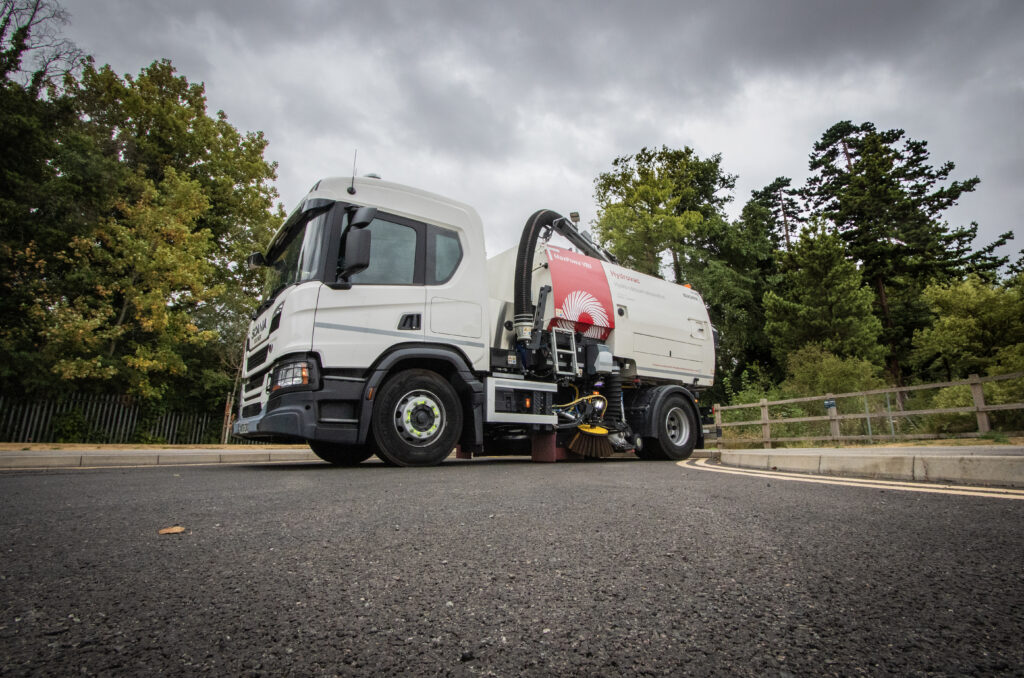
Across the Liverpool City Region, the Partnership procured 71 dedicated food waste collection vehicles through a single procurement exercise, including 49 7.5-tonne open-back food waste collection vehicles and 22 12.5-tonne collection vehicles. They were ordered together and in good time, yet only one authority was able to commence collections in line with the March 2026 deadline, with the final authority not expected to receive all of its vehicles until April 2027.
A single national implementation date created unprecedented demand for specialist vehicles at the same time wider supply chain pressures were affecting production. Even authorities that had planned well found themselves constrained by factors outside their control. The lack of a meaningful hire market for specialist food waste vehicles only compounded the problem, leaving councils with few contingency options.
For most authorities, delayed implementation wasn’t about financial penalties but reputation. Once residents see neighbouring councils receiving a new service, expectations inevitably rise. Managing those expectations through clear communication became just as important as managing the operational rollout.
People, not just vehicles
The experience also demonstrated that successful implementation isn’t solely about procuring vehicles. Every new collection vehicle also needs trained drivers, loaders and operational support. Delivering weekly food waste collections has required thousands of additional employees across the country at a time when the waste and resources sector is already facing skills and labour shortages.
It also reinforces the wider workforce and sector attractiveness challenge highlighted by CIWM President Vicki Hughes’ Think Again campaign. Delivering ambitious environmental policy depends not only on funding infrastructure but on attracting and developing the people with the skills needed to operate it. Future programmes could perhaps do more to link implementation with apprenticeships, employment initiatives and schemes supporting young people or those returning to work.
None of this should detract from the fact that introducing weekly food waste collections is the right thing to do.
What success really looks like
One of the most encouraging aspects has been the response from residents. Participation rates have generally been extremely positive, over 70% in some areas and, in areas still waiting to introduce collections, many residents have actively asked when the service will become available. It demonstrates that when services are convenient, well communicated, and with clear benefits people are willing to embrace them.
Perhaps the biggest misconception is that food waste collections are simply about collecting more waste. Their real purpose is prevention. Experience shows that, after an initial increase, food waste tonnages often begin to fall as residents become more aware of what they are throwing away and change their shopping and cooking habits. Falling tonnages shouldn’t be seen as declining participation, but as evidence that the service is working.
Similarly, councils shouldn’t judge success purely through immediate operational efficiencies. Introducing food waste collections doesn’t suddenly remove large numbers of refuse collection vehicles from the fleet and, while there may be opportunities to optimise rounds over time, those benefits are unlikely to be dramatic in the short term. Even with energy recovered through anaerobic digestion, food waste collections remain an investment for local authorities.
The greater financial benefit may ultimately be realised by residents themselves. If separate food waste collections encourage households to waste less food, they are also likely to spend less on food they never eat.
High-density housing remains one of the greatest operational challenges. Flats, maisonettes and HMOs rarely lend themselves to a standard solution, so successful schemes are built around the needs of individual developments. The good news is that each successful approach provides valuable experience that can often be adapted elsewhere.
For authorities still working towards full implementation, my advice would be straightforward. Firstly, build robust contingency plans. However well you prepare, things won’t always happen exactly as expected. Vehicle deliveries may be delayed, recruitment may take longer than anticipated and operational issues will arise.
Secondly, make use of the knowledge that already exists within the sector. One of the strengths of local government and the waste profession is its willingness to share experience. Through organisations such as CIWM, and through collaboration between authorities, there is an enormous amount of practical knowledge available. There’s no need for anyone to solve every challenge from first principles.
Wider lessons
Looking ahead, I believe there are wider lessons for Government too. Simpler Recycling won’t be the last major environmental reform requiring new infrastructure, equipment and operational change. As future initiatives, from Deposit Return Schemes to other resource and environmental policies, are developed, we should remember that implementation matters just as much as ambition. Phasing, manufacturing capacity, workforce availability and operational realities all deserve a place in the conversation.
It’s also worth considering how future funding models recognise early adopters. A number of authorities had already introduced separate food waste collections before Simpler Recycling became a national requirement. Those councils had already made the investment, yet did not benefit from the funding available to authorities introducing new services. Future reforms should continue to encourage innovation rather than unintentionally disadvantaging those that lead the way.
Implementation hasn’t always been straightforward, but the direction of travel is undoubtedly the right one. Ultimately, success won’t be measured by how much food waste we collect, but by how much food waste we prevent.
Photo: © Kritidech aromoon / Shutterstock.com.
Leave a Reply