














As councils continue to navigate evolving road safety standards, LAPV spoke to Dave Smith, Managing Director of Vision Techniques, about why municipal fleets face particular risks when it comes to vulnerable road users, and how fleet managers should be prioritising safety investment as regulation continues to evolve.
A uniquely exposed sector
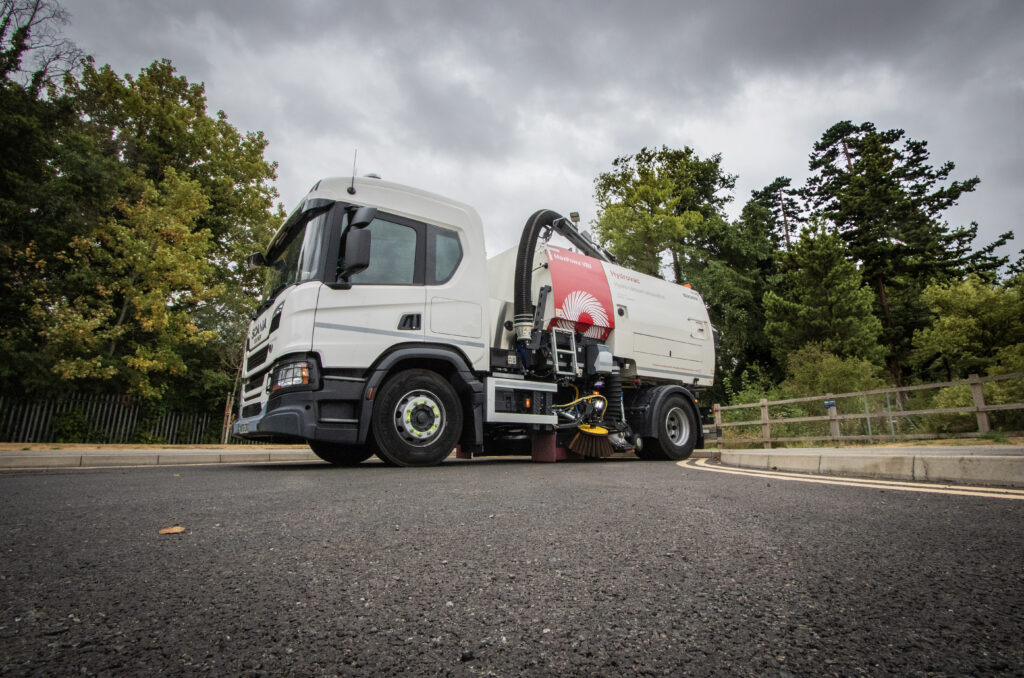
According to Smith, municipal fleets operate in an environment that sets them apart from much of the commercial vehicle sector. Refuse collection vehicles, street sweepers and highways maintenance vehicles spend the majority of their working day in residential streets, town centres and other busy public spaces – locations where interaction with pedestrians, cyclists and other vulnerable road users is constant.
Compounding this, municipal vehicles typically undertake repeated stop-start operations and low-speed manoeuvres throughout their shifts. Smith explains that this combination of frequent movement and regular proximity to the public creates a higher exposure to risk than sectors where vehicles spend more time on higher-speed roads, where interactions with pedestrians are comparatively rare.
Preparing beyond London
With the Direct Vision Standard now mandatory in London, attention is turning to whether similar requirements could extend to other parts of the country. Smith’s advice to fleet managers operating outside the capital is not to treat the standard as a purely regional compliance issue, but as part of a broader industry shift toward improved vehicle safety.
He recommends that when councils are specifying new vehicles, they should look beyond the minimum requirements and consider safety systems aligned with best practice and emerging standards, including camera monitoring systems, detection technologies and effective warning systems. Taking this proactive approach, Smith argues, helps future-proof fleets, avoids the cost of retrofitting vehicles later, and signals a clear commitment to safety for all road users.
From compliance to risk reduction
The 2022 changes to the Highway Code, which placed greater responsibility on larger vehicle operators, have also reshaped how councils approach vehicle specification. Smith says the focus has shifted noticeably from compliance-based specifications toward risk-reduction-based ones.
Rather than simply meeting minimum legal requirements, he notes that many councils are now assessing how technology can actively improve situational awareness and reduce the likelihood of incidents occurring in the first place. This has driven growing interest in camera systems, AI-assisted detection, blind spot monitoring and integrated safety solutions that give drivers a clearer picture of their surroundings while supporting safer vehicle operation.
Does the technology actually change behaviour?
Asked what evidence exists that vulnerable road user (VRU) alerting technology genuinely changes behaviour on the ground, rather than simply satisfying compliance requirements, Smith points to observable, real-world effects. When a vehicle’s intentions are communicated clearly – through audible or visual alerts – people nearby are more likely to recognise that it is manoeuvring and adjust their position accordingly. Drivers, in turn, benefit from knowing their vehicle is issuing clear external warnings to those around it.
Smith is careful to note that no single technology eliminates risk entirely. Instead, he describes the value of combining vehicle awareness systems with external alerting technologies to create multiple layers of protection, supporting safer interactions between vehicles and all road users rather than relying on any one solution.
Where to prioritise on a limited budget
For council fleet managers working within tight budget constraints, a common question is where to focus first: driver-assistance technology or VRU-alerting technology. Smith’s view is that, ideally, the two should work together as part of a layered safety strategy – but where investment must be prioritised, he generally recommends starting with technologies that improve driver awareness.
Systems such as camera monitoring, blind spot detection and AI-assisted detection, he explains, help drivers identify potential hazards and make informed decisions before an incident has the chance to develop. Once these are in place, external alerting technologies can add a further layer of protection by improving communication between the vehicle and its surroundings.
Ultimately, Smith’s message to fleet managers is not to see the decision as choosing one technology over another, but as building what he calls a ‘safety ecosystem’ – one where driver awareness, vehicle intelligence and external communication work together to reduce risk for everyone sharing the road.
As councils continue to weigh safety investment against tightening budgets, Smith’s comments point to a clear direction of travel: risk reduction, not minimum compliance, is increasingly the benchmark municipal fleets are being asked to meet.
Photo: VT Lightboard © Vision Techniques
Leave a Reply