







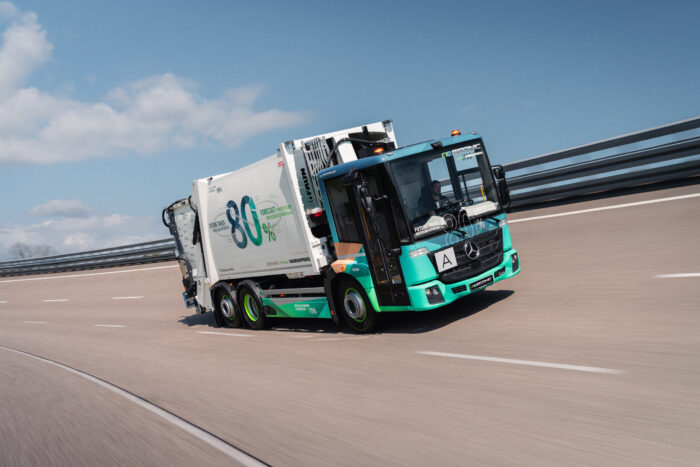
As the waste and recycling sector faces growing pressure to demonstrate sustainability credentials, FAUN Zoeller UK’s reNew VARIOPRESS is emerging as a signal of where refuse collection vehicle (RCV) manufacturing could be heading. LAPV spoke to Ben Lord, Commercial Director at FAUN Zoeller UK, about the project, the barriers still standing in its way, and what it could mean for UK local authorities.
From concept to proof of concept
A TÜV SÜD-verified analysis found that up to 88% of relevant material groups on the vehicle could theoretically use recycled content, against 39% actually realised in the current showcase vehicle. Lord is candid about what stands between those two figures: supply chain readiness. The pilot project brought together FAUN with TSR–The Metal Company, Daimler Truck, and more than 30 other partners spanning steel processing, recycling and supplier industries, all working to widen the pool of recycled materials that can meet FAUN’s quality standards.
That quality bar, Lord stresses, is non-negotiable. He says the manufacturers cannot allow the push toward recycled content to compromise the standards its clients expect. He frames the reNew VARIOPRESS not as a finished product but as a proof of concept – a demonstration of where and how recycled materials can realistically be used in RCVs, with 88% recycled content positioned as a realistic longer-term goal as the vehicle moves from concept toward series production and the supporting supply chain is built out.
Steel leads the way, plastics surprise
Asked which components moved the needle most, Lord points to steel – unsurprising, given how much of the RCV’s body structure it makes up. The container, rear section and ejection shield reached 88% recycled steel content. But some of the more striking gains came from high-volume plastic components: the mud wings and rear control station housing were manufactured using 92% and 99% recycled thermoplastic respectively, almost entirely from recycled material. For a sector where plastics have traditionally been harder to source with high recycled content, that’s a meaningful development, and one Lord says the team is now looking to apply more broadly across the business.
Rethinking end-of-life
Perhaps the most significant shift for UK local authorities lies in how the reNew VARIOPRESS is designed to be decommissioned. Currently, UK vehicles purchased through prudential borrowing are typically disposed of or sold at auction once their working life ends. Lord says FAUN is exploring alternatives, including working with partners on concepts to take back end-of-life RCVs, dismount them, and reintegrate materials and components back into the original supply chain for recycling and reuse – closing the loop rather than simply moving vehicles on.
This sits alongside a broader shift in how FAUN engages with clients throughout a vehicle’s life. The company has established a dedicated Refurbishment specialist role within its Aftermarket team and invested in a refurbishment facility, allowing equipment to be repaired or renewed to manufacturer standards and extending product life well before decommissioning becomes a consideration.
Making the case to procurement
With UK tender processes placing growing weight on lifecycle costs and carbon reporting, Lord believes the reNew VARIOPRESS gives procurement teams a genuine evidence base rather than a sustainability pitch. The vehicle’s environmental performance has been assessed by TÜV using traceable data and recognised standards, including ISO 14021 and DIN standards.
Lord says FAUN’s own track record – from solar panels at its UK head office to an increasingly electric company car fleet – should give clients confidence they’re dealing with a forward-thinking supplier, while acknowledging procurement teams must still balance sustainability goals against tight budgets.
What’s next
The reNew VARIOPRESS was recently showcased at IFAT 2026 in Munich and will appear again at IAA Transportation in Hannover in mid-September, before entering an operational phase with one of FAUN’s largest customers in Germany. It isn’t yet available to order, but Lord says the company is already working to establish the full supply chain, with first units targeted for delivery next year. Significant recent investment at FAUN’s factory – including a new automated painting facility and reconfigured final assembly areas – is aimed at optimising production and lead times as the vehicle moves closer to market.
For now, UK local authorities interested in the project are encouraged to contact FAUN Zoeller’s UK Commercial Team to discuss requirements and likely lead times, as the sector watches closely to see how quickly proof of concept becomes standard practice.
Photo: FAUN Zoeller’s reNew VARIOPRESS © DAIMLER TRUCK
Leave a Reply