














Andy Meale, Head of Sales – Municipal at Kärcher, discusses why maximising cleaning efficiency isn’t just about how much you spend, but what you spend it on.
For local authorities, keeping streets and public spaces clean remains one of the most visible services they provide. The challenge is that this work now has to be delivered against a backdrop of tighter budgets, rising operational costs and increasing pressure to demonstrate value from every investment.
That makes budget efficiency more important than ever. The question is no longer simply which machine is cheapest to buy, but which equipment can deliver the greatest value over its working life.
And, of course, purchase price is only one part of that equation. Fuel consumption, maintenance, downtime, operator productivity and how frequently a machine can be used all contribute to its true cost. A lower-cost machine that spends more time out of service, requires frequent repairs or can only perform one task may ultimately prove more expensive than a more versatile asset that can remain productive throughout the year.
For municipal fleets, versatility can therefore play a significant role in stretching budgets further. Rather than maintaining separate machines for different seasonal requirements, multi-purpose equipment can allow councils to adapt their fleets according to the task at hand.
Kärcher’s MIC 35 and MIC 42, for example, have been designed so implements can be changed relatively quickly, allowing the same machine to support a range of applications. A vehicle used for sweeping during much of the year can also be equipped for winter duties such as snow clearance or spreading, helping councils make greater use of the same core asset.
For teams managing everything from pedestrian areas and car parks to roads and public spaces, that flexibility can simplify fleet planning while reducing the amount of equipment sitting unused for parts of the year.
Operator productivity is another important consideration. Time is one of the most valuable resources within any local authority team, so equipment needs to help operators complete work efficiently and safely.
Pull out quote: ‘The strongest fleets will be those where every machine has a clear role, is used as fully as possible and is maintained to perform reliably for as long as possible.’
Features such as manoeuvrability, visibility, intuitive controls and easy attachment changes can all make a practical difference, particularly in busy urban environments. Compact machines that can access narrow streets or pedestrian areas may also reduce the amount of additional manual cleaning required, while larger hopper capacities and fewer interruptions can increase productive working time during each shift.
Reliability is equally critical. When a machine breaks down, the cost extends beyond the repair itself. Work may be delayed, staff may need to be redeployed, and replacement equipment may have to be sourced, while expectations around service standards remain unchanged.
That is why proactive maintenance should be viewed as part of effective budget management rather than simply another cost. Regular servicing can help identify wear before it develops into a larger issue, reduce the risk of unexpected downtime and support more consistent performance over the life of the machine.
It is also worth considering service intervals, access to replacement parts and technical support at the procurement stage. The right aftersales support can have a direct impact on how long a machine remains productive and how effectively it performs over time.
Of course, there is no single fleet model that will suit every authority. The needs of a dense city centre will differ considerably from those of a rural council, so procurement decisions need to reflect the environments, workloads and service expectations involved.
What remains consistent is the need to look beyond the initial cost. At a time when councils are being asked to maintain high standards with increasingly limited resources, the strongest fleets will be those where every machine has a clear role, is used as fully as possible and is maintained to perform reliably for as long as possible.
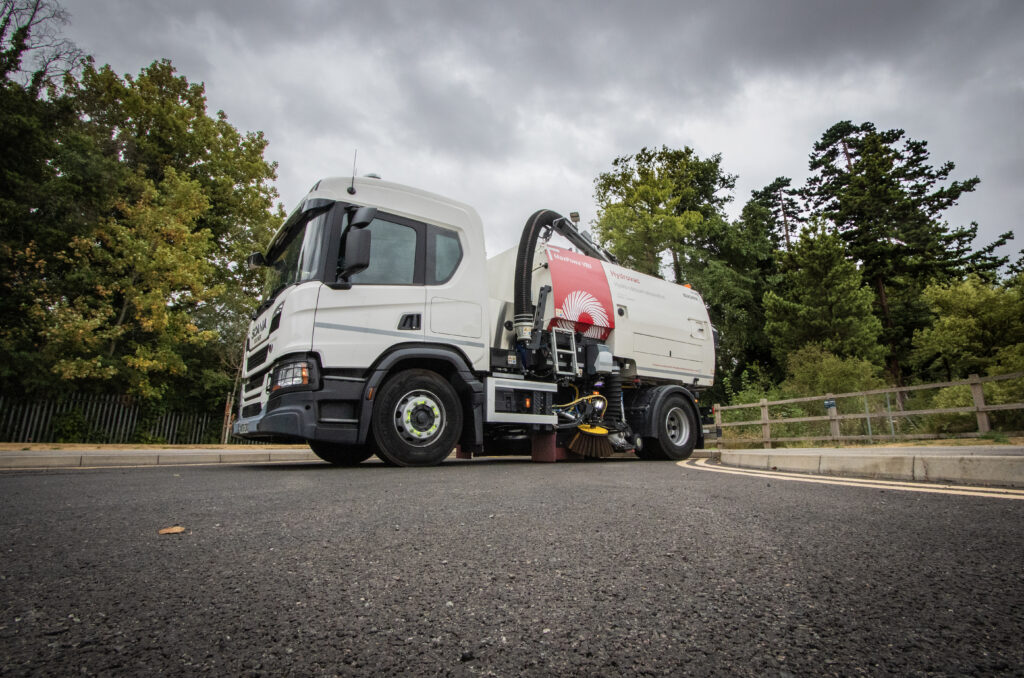
Photo: Kärcher’s MIC 42 in action © Kärcher
Leave a Reply