













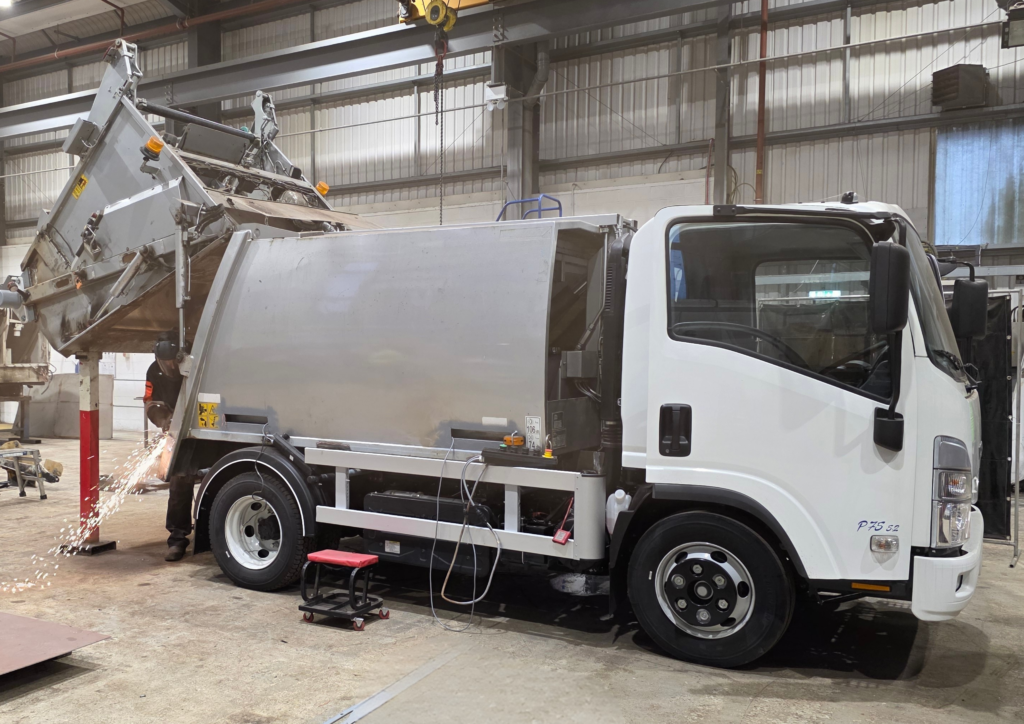
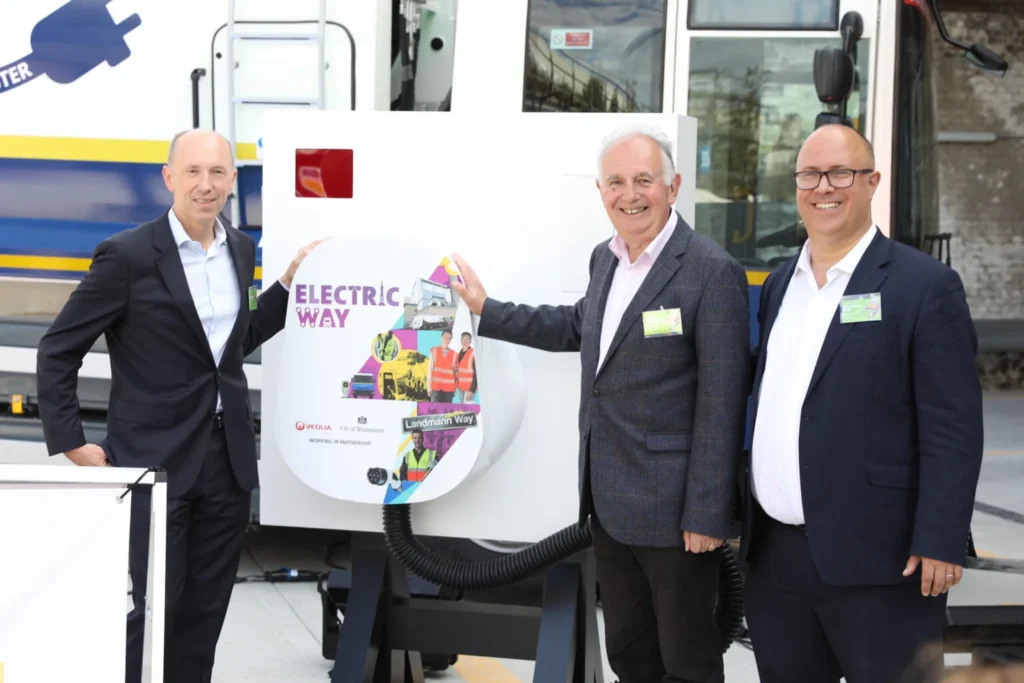




Neath Port Talbot Council has become the first local authority in the UK to run a fully electric recycling collection fleet, a milestone that marks a significant step in the sector’s shift away from diesel. Members of Neath Port Talbot Council Fleet and Waste Teams spoke to LAPV about the practical realities of the switch.
Cost and infrastructure: the first hurdle
For any council considering electrification, vehicle capital cost is likely to be the first sticking point, and Neath Port Talbot is candid about this. Electric vehicles remain considerably more expensive than their diesel equivalents, though the council found that introducing competition into its procurement process helped push prices down. Crucially, funding from the Welsh Government also played a significant role in reducing the upfront costs of the transition, without which the project would likely have looked very different on paper.
Charging infrastructure brought its own complications. Ensuring that chosen sites had enough power capacity to support the number and size of chargers required careful planning, and capital funding and grants had to be weighed alongside ongoing revenue costs such as SIM/Wi-Fi connectivity, back-office systems and maintenance. With charge points spread across multiple sites, the council also stresses that establishing clear roles and responsibilities for managing that infrastructure once installed was essential – a lesson other authorities running multi-depot operations may want to note early rather than retrospectively.
Solar power in the mix
One of the more distinctive features of the Neath Port Talbot project is its on-site solar photovoltaic (PV) infrastructure, which connects directly into the site’s main electricity supply. The solar system’s primary job is powering the waste processing plant during operation – either topping up demand or, during periods of strong generation and lower usage, covering the plant’s needs entirely.
Because the EV charging infrastructure draws from the same site supply, solar generation also feeds into charging the fleet during daylight hours. The council is careful to note that the exact share of charging met by solar varies considerably depending on weather, season, site demand and when vehicles are plugged in. During low-generation periods – overnight, through winter, or on heavily overcast days – the site simply draws from the grid to keep vehicles fully charged and operational. The council describes this hybrid approach as resilient and reliable, maximising renewable energy use while retaining the security of a grid-connected backup, which in turn helps cut both carbon emissions and running costs without putting service continuity at risk.
Bigger vehicles, evolving routes
The new electric recycling vehicles offer greater carrying capacity than the diesel models they replaced, and the council expects this to deliver efficiency gains as the rollout matures. For now, though, the focus is on monitoring vehicle performance and collection data rather than making sweeping changes to schedules and routes.
The logic is straightforward: more capacity means vehicles can collect more material before needing to return to unload, cutting downtime and giving crews more time actually collecting recyclables. As the fleet becomes fully operational, the council anticipates this will translate into more efficient route planning, reduced mileage and improved overall productivity – benefits it expects to quantify more precisely once a full operating cycle’s worth of data has been gathered.
Weighing up the total cost
As one of the first fleets of its kind in the country, Neath Port Talbot acknowledges that producing an exact cost breakdown or a clear break-even point remains difficult. That said, Government grant funding has brought the overall cost much closer to that of a diesel fleet, with the council estimating the additional cost to the authority at around 20%.
Useful comparative data has come from a single 12-tonne, 140kWh RRV purchased back in 2023, which has helped the council assess likely maintenance costs against its diesel fleet – vehicles that typically consume around 7,500 litres of fuel a year. Based on this experience, the council expects further savings of roughly 20% from reduced maintenance, since electric vehicles don’t require engine or gearbox upkeep, while regenerative braking should also cut brake wear and the downtime that comes with it. Notably, the council reports more of its diesel vehicles being taken off the road due to engine management faults linked to Euro 6 emissions control systems – an issue the electric fleet simply doesn’t face.
The vehicles are being purchased over an eight-year period aligned with the traction battery warranty, meaning the key component remains covered for the vehicle’s entire operational life. Once batteries are eventually renewed, the council sees potential to repurpose old batteries for on-site electricity storage – another way the project’s value could extend beyond the road. Combined with large solar arrays already installed on existing building roofs and set against the backdrop of fuel price volatility driven by global conflicts, the council argues the case for electrification is a compelling one.
Advice for other councils
Given the scale of the undertaking – this is the first full-service DAF EV fleet rollout in the UK – the procurement process took considerable time. The council built a high level of detail into its specification and documentation from the outset, a decision it credits with securing the best possible outcome. Looking ahead, it expects vehicle prices to fall as real-world performance data builds up and market competition increases, mirroring trends already seen in the car and light van sectors.
Extensive work on charging infrastructure, and aligning it with solar generation wherever feasible, was also central to making the project viable. The council is upfront that challenges have arisen throughout the process but says a key decision – trialling a single electric vehicle two years before committing to full fleet electrification – gave it invaluable real-world performance data and allowed lessons to be applied throughout the wider transition, rather than learned the hard way at scale.
A model for the sector?
For other local authorities eyeing similar transitions, Neath Port Talbot’s experience offers a fairly clear-eyed picture: electrification is achievable, but success depends heavily on early infrastructure planning, securing the right grant funding, and building in time to pilot before committing fully. The council’s approach of pairing its EV rollout with existing solar infrastructure also points to a broader lesson for the sector – that the environmental and financial case for electrification strengthens considerably when charging strategy is designed around a site’s wider energy generation, rather than bolted on afterwards.
With vehicle prices expected to fall as the market matures, and with more authorities likely to follow Neath Port Talbot’s lead in the coming years, this early rollout may prove to be a useful reference point for local government fleets across the UK weighing up their own path away from diesel.
Photo: © Erman Gunes / Shutterstock.com.
Leave a Reply