












From pothole repair and waste handling to winter maintenance, JCB’s Government & Municipalities team is helping councils choose equipment matched to the job, balancing productivity, whole-life costs and environmental goals.
Local authorities rely on their fleets to deliver a wide range of essential public services, from maintaining highways and managing waste to winter operations and grounds maintenance. Yet the demands placed on those fleets are changing, with councils increasingly required to balance operational performance and productivity with budgets, whole-life costs and environmental objectives.
For JCB, supporting this sector is about more than supplying individual machines. Through its dedicated Government & Municipalities team, JCB works with local authorities to understand how equipment is used across different services and identify solutions that can help maximise utilisation, efficiency and value throughout the working life of a machine.
That support can include site visits and fleet reviews, machine demonstrations, advice on specifications and attachments, and operator training, helping authorities select equipment based on the demands of the job rather than taking a one-size-fits-all approach.
The available equipment spans compact machines through to wheeled loading shovels, Loadall telescopic handlers and specialist waste handling products, together with electric equipment for applications where zero emissions at the point of use and lower noise levels are required.
Keeping highways moving
Highway maintenance is one of the most visible services delivered by local authorities and one where selecting the right equipment can have a direct impact on productivity.
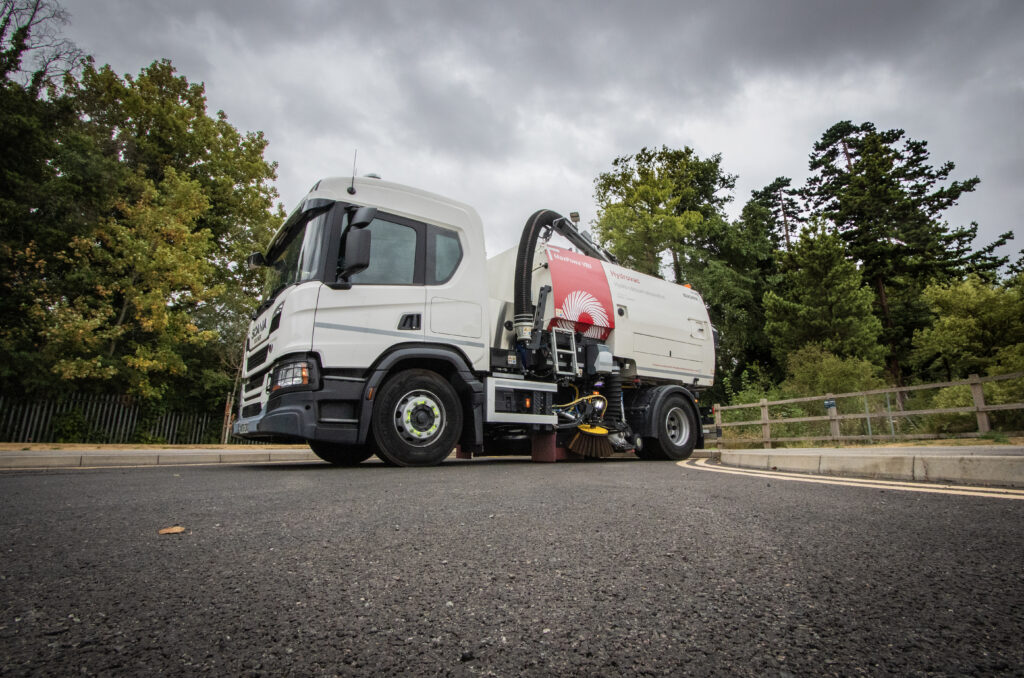
JCB’s Pothole Pro is a specialist 3-in-1 machine designed to deliver efficient, permanent pothole repairs. It is engineered to cut, crop and clean defects using dedicated attachments, preparing each pothole for reinstatement in as little as eight minutes. The machine can prepare up to 250m² of roadway per shift, delivering permanent repairs at an average cost of £29.28 per m² – less than half the typical cost previously reported by councils.
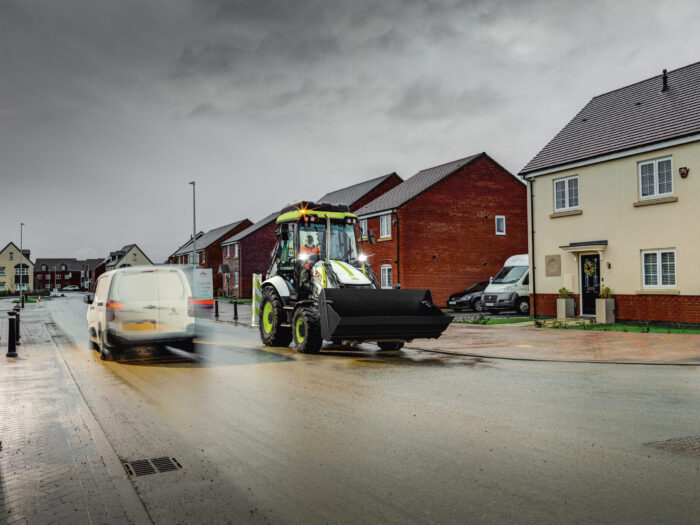
In addition, the JCB 3CX Compact backhoe loader provides a versatile option for highway maintenance, undertaking breaking, trenching, ditch clearing, grading and materials handling. Its compact dimensions allow it to work within a single carriageway without a full road closure, while four-wheel steering provides manoeuvrability in urban working environments and a 40kph road speed allows movement between sites.
Supporting equipment including compactors, mini excavators and skid steers can also provide authorities and their contractors with solutions for different stages of road repair and maintenance.
Supporting waste and recycling operations
For demanding waste and recycling operations, JCB offers purpose-designed solutions for loading, materials handling, sorting and transfer applications.
Each JCB Wastemaster model has been tailored to the rigours of the waste handling environment with a series of guards, filters and safety features designed for durable and safe operation in demanding waste applications.
The 457 Wastemaster wheeled loading shovel can load household waste from stockpiles into walking-floor trailers, clear yards and manage stockpiles. Different loader arm lengths and traction options are available to suit waste handling applications and site conditions.
If a loader-excavator combination is needed, the JCB 5CX Wastemaster can move, compact and sort waste using a single machine.
The electric JCB 35-22E 4×4 Teletruk provides a further option for sites where space is at a premium. Its telescopic boom allows a 3,500kg load to be handled at 2m forward reach, giving operators the ability to load and unload from one side of a vehicle and helping improve flexibility in busy depots and recycling facilities.
Ready for winter
Winter maintenance presents another distinctive challenge for local authority fleets, with equipment often required at short notice and in demanding conditions.
JCB machines can support activities including snow clearance, gritting and material handling. JCB’s Fastrac 4220 iCON utility combines 60kph road travel speeds with the ability to operate ploughs, sweepers and deck-mounted sprayers.
Meanwhile, JCB wheeled loaders, Loadalls and TM telescopic wheeled loaders can support the movement and loading of salt and other materials.
The TM320 telescopic wheeled loader combines the best of both worlds: telescopic reach with an articulated chassis for loading top-fed salt spreaders and manoeuvring around busy winter maintenance depots.
Getting more from the fleet
This ability to perform multiple roles is increasingly important when considering the whole-life value of fleet investment. Choosing the right machine, attachment and specification can allow a single asset to support several services, helping authorities make better use of their fleet across the year.
Environmental requirements are also influencing procurement decisions. JCB offers electric products for applications where zero emissions at the point of use and reduced noise can provide operational benefits, particularly when working in sensitive urban environments, indoors or close to residents.
Alongside the machine itself, fleet management technology can provide authorities with greater insight into how equipment is being used. JCB LiveLink telematics provides information including machine location, operating hours and service requirements, supporting maintenance planning and helping fleet managers better understand utilisation, allowing operators and fleet managers to get the most from their investment.
JCB’s extensive dealer and aftersales network provides parts, servicing and technical support throughout the working life of its equipment, helping authorities minimise downtime and keep essential services operating.
Combined with the Government & Municipalities team’s fleet reviews, demonstrations and technical support, this breadth of equipment enables JCB to provide local authorities with solutions matched to their operational, budgetary and environmental requirements.
Photo:
Leave a Reply