















In this in-depth interview, Geoff Rigg, Aftermarket Director at Dennis Eagle, sets out how councils can tackle the growing shortage of skilled HGV technicians, explaining why the company’s new Technical Training Centre in Warwick is designed to strengthen recruitment, raise safety standards and build long-term workforce resilience across local authority fleets.
Local authorities across the UK are grappling with one of the most acute challenges in fleet management: a deepening shortage of skilled HGV technicians. As refuse collection vehicles (RCVs) and recycling systems become more complex—both mechanically and electronically—councils need technicians who can diagnose, repair and maintain fleet assets safely and efficiently. Yet the talent pipeline is shrinking, recruitment is increasingly difficult, and downtime pressures continue to rise.
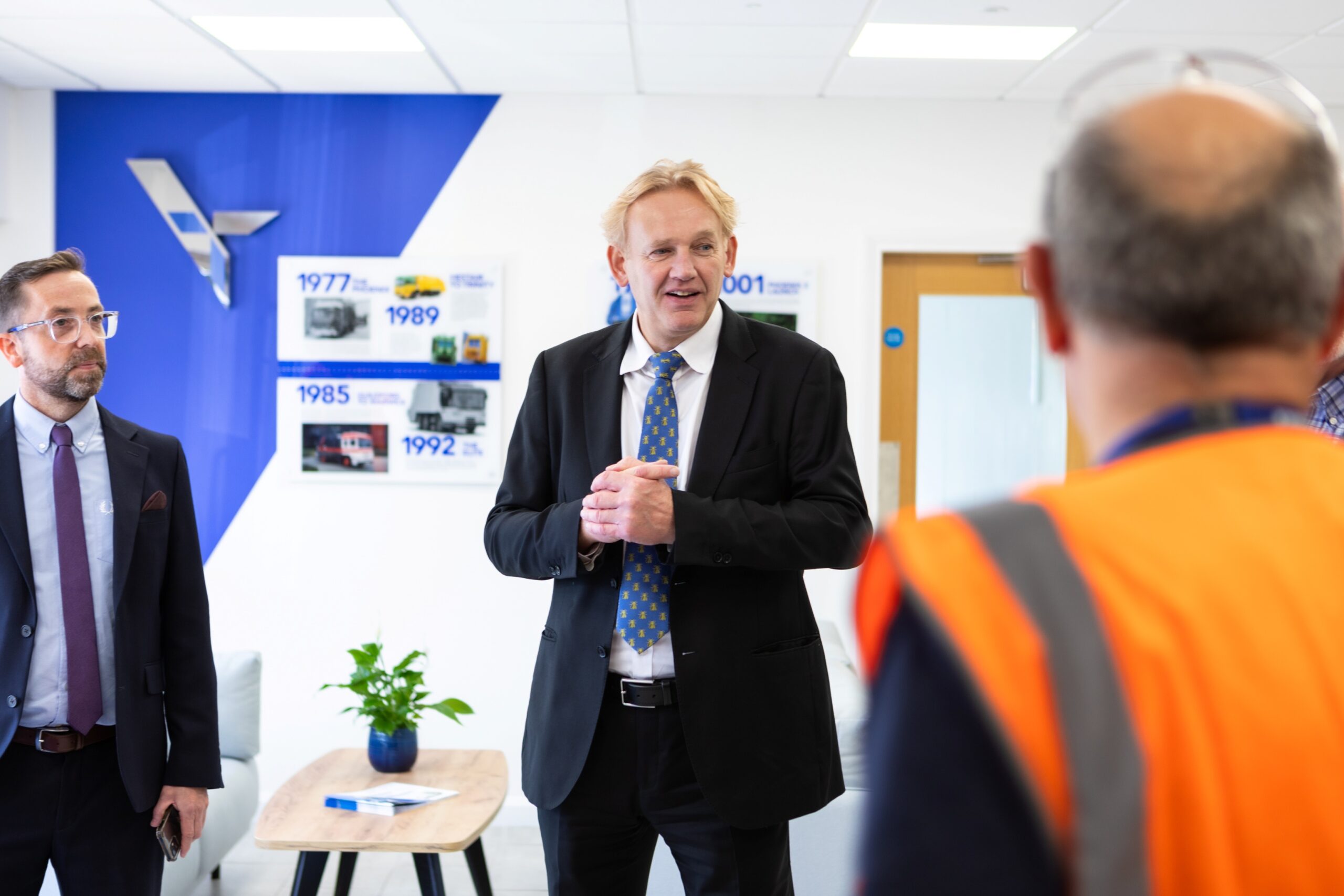
Dennis Eagle has launched its new Technical Training Centre in Warwick, designed from the ground up to address the pain points shared by councils and contractors alike. As Geoff Rigg, the company’s Aftermarket Director, explains, ‘the vacancies outstrip the people in the current pool,’ meaning traditional recruitment routes can no longer meet the industry’s needs. The new centre is therefore intended not just as an in-house training facility, but as an industry resource—one that helps local authorities bring in new people, upskill existing teams, and embed best practice across the fleet lifecycle.
A centre built for the sector’s most pressing needs
The Technical Training Centre brings together the Dennis Eagle and Terberg Matec UK brands under one roof for the first time. This means every major product—Elite+ chassis, Olympus bodies, Beta and Terberg bin lifts, and its specialist recycling vehicles—is now supported through a single training hub. But the most striking feature isn’t the building—it’s the philosophy behind it.
Rigg says that many organisations, struggling to recruit, have needed to hire individuals without the basic technical grounding once taken for granted. ‘We’ve had people turning up on courses who can’t read an electrical drawing or a hydraulic schematic,’ he says. To counter this, the centre’s training model has been restructured: all technical delegates will now be offered initial foundation modules in electrics and hydraulic principles.
This ‘back-to-basics’ approach ensures that every learner enters the workshop with the core competencies needed to succeed. Once they have that grounding, they can move on to the centre’s more advanced courses—blending theory with hands-on work on dedicated training vehicles.
Hands-on learning, built for practical people
One of the strongest messages from the interview was the importance of practical learning. Many industry courses, Rigg says, are overly abstract, theoretical, or classroom based. That model doesn’t suit the way most technicians learn. At Warwick, the approach is different: ‘They’ll learn the theory, then go and put it into practice by working on equipment.’
The facility includes specially built classrooms and hands-on practice areas where technicians can train on real, fully operational bodies, lifts and chassis. This not only builds confidence—it directly improves diagnostic ability and reduces in-service downtime.
A new focus on safety and compliance
Dennis Eagle has embedded health and safety into its training programmes. The company has identified 14 areas of RCV maintenance that pose the greatest risk—tasks such as hot work or hopper floor replacement—and developed dedicated safe-working modules for them.
In many workshops, Rigg notes, a job is assigned with the instruction ‘go and do it, then tell us how you did it.’ Few councils have access to structured ‘how to do it safely’ procedures. Dennis Eagle’s new approach aims to change that, making safe operating practice a core part of technical competence.
The centre also provides other compliance-aligned training such as LOLER, inspection techniques, MOT preparation, and even cleaning and maintenance modules.
Training for managers and operators too
Recognising that fleet performance relies on more than technicians, Dennis Eagle has also introduced non-technical training for supervisors, controllers and fleet managers. These modules give managerial staff a clearer understanding of how vehicles work, how faults occur and how maintenance should be structured—improving communication with technical teams and supporting better operational decisions.
For operators, the company has launched a new e-learning platform, offering video-led modules, knowledge checks and recorded training evidence. For large authorities with hundreds of loaders, this solves a longstanding challenge: ensuring consistent training, handling refresher programmes, and providing evidence of instruction in case of incidents.
Crucially, Dennis Eagle is offering this operator e-learning free of charge.
Creating a career pathway for the sector
A standout innovation is the introduction of a career pathway, with technicians progressing from accredited status to skilled technician and finally master technician level. With a central database tracking progress and recommending refresher or specialist courses, councils gain a structured, long-term workforce development tool.
Rigg emphasises the value of recognition and progression: achieving IMI Level 3 accreditation in certain courses ‘is powerful enough for them to feature on CVs,’ helping attract new entrants from outside the sector while improving retention.
Easing the pain felt across the industry
As Rigg puts it: ‘Everyone has the same pain… whether you’re in Merthyr Tydfil or Manchester.’ With its new Technical Training Centre, Dennis Eagle aims to relieve that pressure—helping councils overcome the technician shortage, build safer and more capable teams, and future-proof their fleets in a rapidly evolving operational landscape.
This article was originally published in the Winter 2025 issue of LAPV. Sign up here to receive your free copy of future issues.
Leave a Reply