















East Devon District Council has topped the national recycling league table for the lowest residual household waste per household. The council tells LAPV how it was done.
When the national recycling and waste league table was published this year, one name sat at the very top: East Devon District Council. Ranked first in the country for the lowest amount of residual household waste per household, it is the latest chapter in a story of sustained environmental performance that has seen the district hold a top 10 position nationally for at least five consecutive years.
But what lies behind the numbers — and how does a largely rural district consistently outperform its peers across England?
A system built around behaviour change
At the heart of East Devon’s approach is a deceptively simple idea: make it easier to recycle than to throw away. The council operates a three-weekly refuse collection service with restricted waste capacity based on household size, a model that has proved highly effective in nudging residents towards recycling rather than defaulting to the general waste bin.
‘This has contributed to increased recycling participation and minimising residual waste,’ the council says. The restricted capacity model encourages residents to think carefully about what they put in which bin – and the results speak for themselves.
Supporting this is an increasingly sophisticated use of vehicle routing technology. Modern route-planning systems draw on geographic and operational data to design efficient collection rounds, taking into account road layouts, traffic patterns, vehicle types and property density. Routes are adjusted over time as housing grows or service needs change, and in-cab data systems allow ongoing monitoring to flag persistent contamination hotspots or areas generating higher-than-average residual waste. Where problems are identified, targeted communications can be deployed to help residents recycle more effectively.
The fleet behind the performance
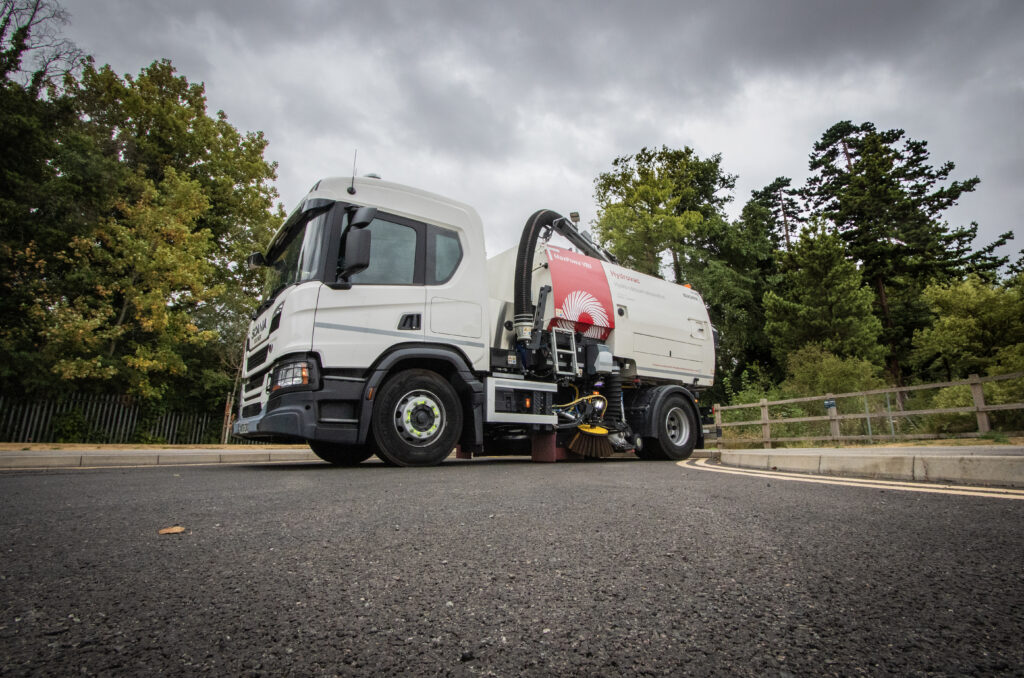
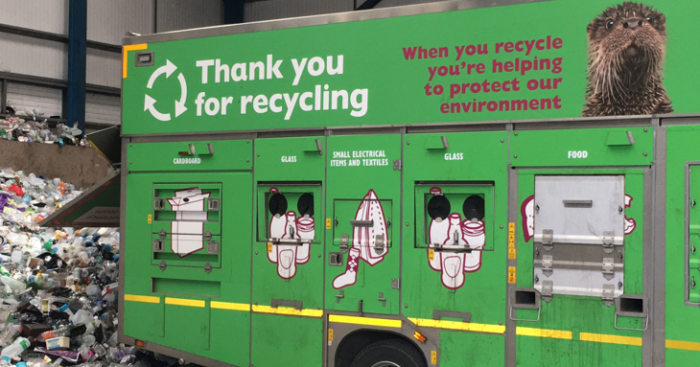
Keeping East Devon’s streets and lanes served is a fleet of seven refuse collection vehicles (RCVs) and 29 Romaquip recycling vehicles – a significant operation across a district that covers a varied and sometimes challenging landscape of towns, villages and rural communities.
The council has already taken steps towards electrifying the fleet, purchasing two Romaquip RQE electric vehicles in 2024. These are being treated as real-world trials, testing range and performance across the different collection rounds and topography of the district before any wider commitment is made. Future plans include the purchase of an electric RCV or a conversion, though the council is taking a measured, evidence-led approach before scaling up.
On the question of the government’s £1bn cleaner transport funding package, East Devon has not yet begun any formal planning work to assess infrastructure or grid capacity requirements – an area that may attract increasing attention as the transition to electric vehicles gathers pace nationally.
A new chapter with EdenServ
Later this year, East Devon’s recycling and waste services will transfer to EdenServ, a council-owned company. The existing fleet will transfer with the service, and a fleet replacement programme is in place to address ageing vehicles. The council is confident the transition will preserve the high standards residents have come to expect.
Cllr Geoff Jung, Portfolio Holder for Environment Operations, is in no doubt about what the top ranking represents. ‘This is a fantastic result for East Devon and something we can all be proud of,’ he said. ‘Keeping residual waste as low as possible and maintaining a strong recycling rate takes a real team effort, and I want to thank residents as well as our recycling and waste team for everything they do week in, week out. Consistently performing at this level over a number of years gives us real confidence as we move into the next phase of service delivery.’
Residents at the centre
Ultimately, no routing algorithm or fleet investment delivers results without the people putting the right things in the right bins. East Devon’s sustained success is, at its core, a community achievement – a reflection of residents who have embraced recycling as a habit rather than a chore, supported by a team that has made it as straightforward as possible to do so.
As EdenServ prepares to take the reins, the challenge will be to maintain that culture while continuing to innovate. On current evidence, East Devon has every reason to be confident it can.
Photo: © East Devon District Council
Leave a Reply